
Receptionist AI Agents for Clinics
67% of patients hang up after 2 minutes on hold. AI receptionists handle calls 24/7, schedule appointments, and save clinics $35K+ yearly. Learn how.
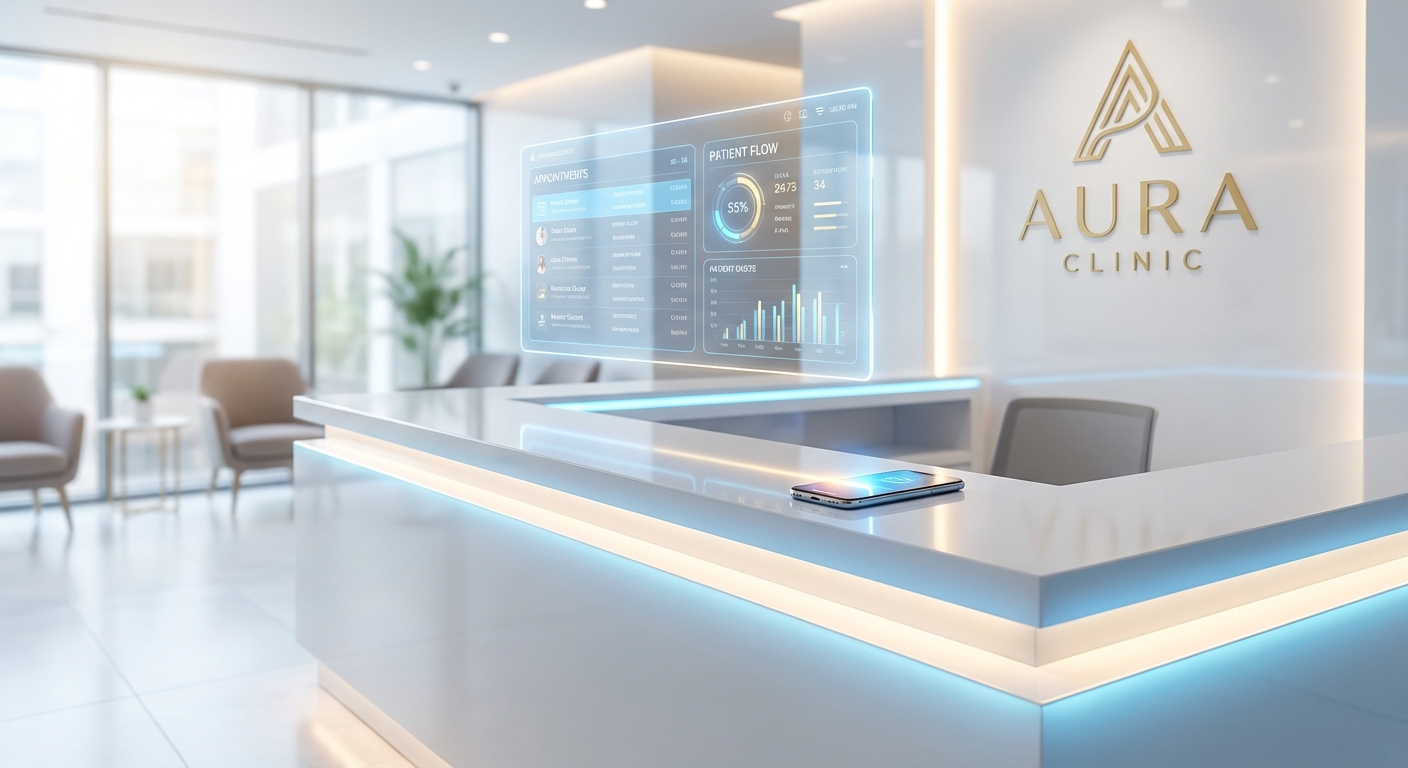
Walk into most clinics during peak hours and you'll see the same scene: phones ringing off the hook, patients waiting at the front desk, and a receptionist juggling appointment bookings while trying to answer insurance questions. It's chaos — and it's costing you patients.
Here's the reality: 67% of patients won't wait on hold for more than two minutes before hanging up. That's a lost booking. A missed opportunity. Revenue walking out the door because your front desk can't keep up.
Traditional receptionist roles create bottlenecks. You're paying $35,000–$50,000 annually per receptionist, plus benefits, sick days, and training time. And even the best human staff can't answer calls at 11 PM when a potential patient is researching procedures from their couch.
AI receptionist agents flip this script entirely. They handle appointment scheduling, answer common questions, route urgent inquiries, and engage patients across multiple channels — Instagram DMs, WhatsApp, your website chat — simultaneously. No hold times. No missed calls. No "we're closed" messages turning prospects away.
The result? More bookings, lower costs, and patients who actually feel heard from their first interaction with your clinic.
What Are AI Receptionist Agents and How Do They Work?
AI receptionist agents are intelligent software systems that handle front-desk tasks without human intervention. They answer patient calls, book appointments, respond to common questions, and follow up after visits — all through natural conversations that feel surprisingly human.
Here's what makes them different from basic chatbots: they actually understand context.
When a patient asks "Can I get Botox next Tuesday afternoon?" the AI doesn't just match keywords. It checks your calendar availability, confirms the service, asks about medical history if needed, and books the slot. If Tuesday's full, it suggests alternatives. No back-and-forth emails. No phone tag.
The technology runs on natural language processing (NLP) — the same tech powering Siri and Alexa, but trained specifically for healthcare conversations. These systems learn from thousands of patient interactions to recognize intent, extract key information (like preferred dates or symptoms), and respond appropriately.
Machine learning makes them smarter over time. Every conversation teaches the AI new patterns. If patients frequently ask about downtime for laser treatments, the system learns to proactively mention recovery details.
The real power comes from integration. Modern AI receptionists connect directly to your practice management software — whether you use SimplePractice, Jane, or Aesthetic Record. When someone books online, the AI updates your calendar instantly. When a patient calls asking about their last visit, it pulls their file and answers accurately.
They work across channels too. The same AI that handles phone calls can manage Instagram DMs, website chat, and WhatsApp messages simultaneously. One patient texts about pricing while another calls to reschedule — both get immediate, accurate responses.
You're not replacing your front desk entirely. You're giving them an AI assistant that handles the repetitive stuff so they can focus on patients who need actual human attention.
The Benefits of AI Receptionist Agents for Clinics
Let's cut to the chase — your front desk staff are drowning in repetitive questions while your phone lines stay jammed during peak hours. Meanwhile, you're paying premium wages for tasks that AI can handle better and cheaper.
AI receptionist agents slash operational costs dramatically. You're not replacing your entire team — you're removing the bottleneck. These systems handle appointment scheduling, insurance verification, and basic patient queries without coffee breaks or sick days. A clinic running an AI agent can redirect human staff toward complex patient needs and relationship-building instead of answering "What are your hours?" for the hundredth time this week.
The math is simple. One AI agent costs less than a part-time receptionist but works every hour of every day. No overtime. No benefits. No turnover.
Patient satisfaction jumps when they get instant answers. Here's what actually happens: Someone searches for Botox clinics at 11 PM (because that's when they finally have time to think about it). They visit your website, and your AI agent immediately answers their questions about pricing, availability, and treatment details. Your competitor's site? A contact form that won't get answered until Tuesday.
You just won that patient.
AI agents respond in seconds across multiple platforms — your website, Instagram DMs, WhatsApp. Patients don't wait on hold. They don't get transferred three times. They get answers and book appointments while the impulse is hot.
Consistency eliminates the human error problem. Every patient gets the same accurate information about your services, pricing, and policies. No more "Well, Sarah told me it was $200 but Jennifer says $250." No more missed appointment reminders because someone forgot to send them.
The AI follows your exact protocols every single time. It captures patient information correctly. It routes urgent inquiries to the right team member. It doesn't forget to mention your new service or current promotion.
Your brand voice stays consistent whether it's Monday morning or Saturday night. That's the kind of reliability that builds trust — and trust converts browsers into booked appointments.
Overcoming Common Concerns About AI in Clinics
Look, I get it. You're hesitant about bringing AI into your clinic. You've got patient data to protect, a team that's already stretched thin, and the last thing you need is some complicated tech project that makes things worse.
Let's tackle the big concerns head-on.
"What about HIPAA compliance?"
This is your number one worry, and it should be. Here's the truth: reputable AI receptionist platforms are built HIPAA-compliant from the ground up. They encrypt patient data both in transit and at rest, maintain strict access controls, and sign Business Associate Agreements (BAAs) with every client. Before you commit to any AI system, ask three questions: Do they offer a signed BAA? Where is patient data stored? What's their encryption standard? If they can't answer clearly, walk away.
"We'll lose our personal touch."
Actually, the opposite happens. Your front desk staff spends 60-70% of their day answering the same questions: "What are your hours?" "Do you take my insurance?" "Can I reschedule?" The AI handles that repetitive stuff. Your team gets freed up to have real conversations with anxious patients, handle complex scheduling situations, and provide actual human support where it matters.
The AI doesn't replace your receptionist — it removes the noise so she can focus on what humans do best: empathy, problem-solving, and relationship building.
"This sounds complicated to set up."
It's not 2010 anymore. Modern AI receptionists integrate with your existing practice management software in days, not months. Most platforms offer white-glove onboarding — they'll train your team, customize responses to match your clinic's voice, and provide ongoing support. Your staff doesn't need to become tech experts. They just need to know when to let the AI handle routine questions and when to step in personally.
The implementation curve is shorter than you think.
How to Choose the Right AI Receptionist Agent for Your Clinic
Picking the wrong AI receptionist is like hiring a front desk person who doesn't speak your language — expensive and frustrating. Here's what actually matters.
Start with your tech stack. The best AI receptionist means nothing if it can't talk to your existing systems. Does it integrate with your practice management software? Can it sync with your scheduling platform without manual data entry? You'll want native integrations, not clunky workarounds that create more work than they save.
Scalability isn't negotiable. Your clinic won't stay the same size forever. The solution you choose should handle 50 calls a day now and 500 later without requiring a complete overhaul. Ask vendors directly: "What happens when we add two more locations?" If they hesitate, keep looking.
Customization separates the winners from the pretenders. Generic responses kill trust fast. You need an AI that learns your clinic's voice, understands your specific services, and can handle the questions your patients actually ask. "Can I get Botox while pregnant?" isn't the same as "Do you take my insurance?" Your AI should know both answers.
Vendor reputation tells you everything. Check reviews from other medical practices — not just testimonials on their website. How responsive is their support when something breaks at 4 PM on Friday? Do they push regular updates, or did they abandon the product after launch? Healthcare moves fast. Your AI vendor needs to keep pace.
Calculate real ROI, not fantasy numbers. Don't just look at what you'll save on reception staff. Factor in missed appointment costs (the average no-show costs clinics $200), after-hours booking conversions, and time your team spends on phone tag. A good AI receptionist should pay for itself within three months through captured revenue alone.
Match the solution to your actual goals. If you're drowning in appointment requests, prioritize scheduling capabilities. If you're losing patients to competitors who answer faster, focus on response time and multi-channel support. Don't pay for features you won't use.
The right AI receptionist should feel invisible to your team and indispensable to your patients.
Real-Life Success Stories: Clinics Using AI Receptionist Agents
The numbers tell the story better than any marketing pitch could.
A dermatology practice in Austin implemented an AI receptionist and saw their appointment booking rate jump 34% in the first quarter. The reason? Their AI agent handled after-hours inquiries that previously went to voicemail. Patients who messaged at 9 PM got instant responses — and booked appointments before they could think twice.
Here's what shocked the practice manager: 73% of new patient bookings happened outside business hours. They'd been leaving money on the table every single night.
A plastic surgery clinic in Miami tackled a different problem — no-shows were killing their schedule efficiency. Their AI receptionist started sending personalized appointment reminders via SMS and WhatsApp, adjusting timing based on each patient's response patterns. No-show rates dropped from 18% to 6% within two months. That's roughly 12 additional patients seen per week in a practice that books 100 weekly appointments.
The ROI? The clinic calculated they recovered about $48,000 in monthly revenue that would've been lost to empty appointment slots.
A med spa in Los Angeles focused on staff productivity. Before their AI agent, receptionists spent 60% of their day answering the same questions: "Do you take insurance?" "What's Botox cost?" "Can I get an appointment this week?"
After implementation, call volume to human staff decreased 47%. Receptionists redirected that time toward high-value activities — calling patients due for follow-ups, upselling treatment packages, handling complex scheduling needs.
The lesson from all three? Start with your biggest pain point. Don't try to automate everything at once. The Austin dermatology practice initially only activated after-hours booking. The Miami clinic focused solely on appointment reminders. The LA med spa began with FAQ responses.
Solve one problem well, measure the impact, then expand.
Is Your Clinic Ready for an AI Receptionist Agent?
Here's the truth: if you're losing patients to voicemail or your front desk is drowning in repetitive questions, you're already paying the cost of not having AI support.
Start by auditing your current setup. Track these numbers for one week:
- How many calls go unanswered during peak hours?
- What percentage of Instagram DMs get responses within an hour?
- How much time does your team spend on appointment confirmations?
If any of those metrics make you wince, an AI receptionist can fix it.
The best part? You don't need to overhaul everything overnight. Begin with one high-impact area — maybe after-hours chat support or appointment reminders — and expand from there.
Ready to explore what AI can do for your clinic? Start by mapping out your busiest patient touchpoints. Identify where delays happen, where staff gets overwhelmed, and where potential patients slip through the cracks.
Or talk to someone who's done this before. At Behan Agency, we help clinics implement AI solutions that actually work — not generic chatbots that frustrate patients. Let's figure out what makes sense for your practice.
Tags
Ready to Transform Your Clinic's Marketing?
Let's discuss how AI-powered marketing solutions can help you attract more patients and grow your practice.
Get Started